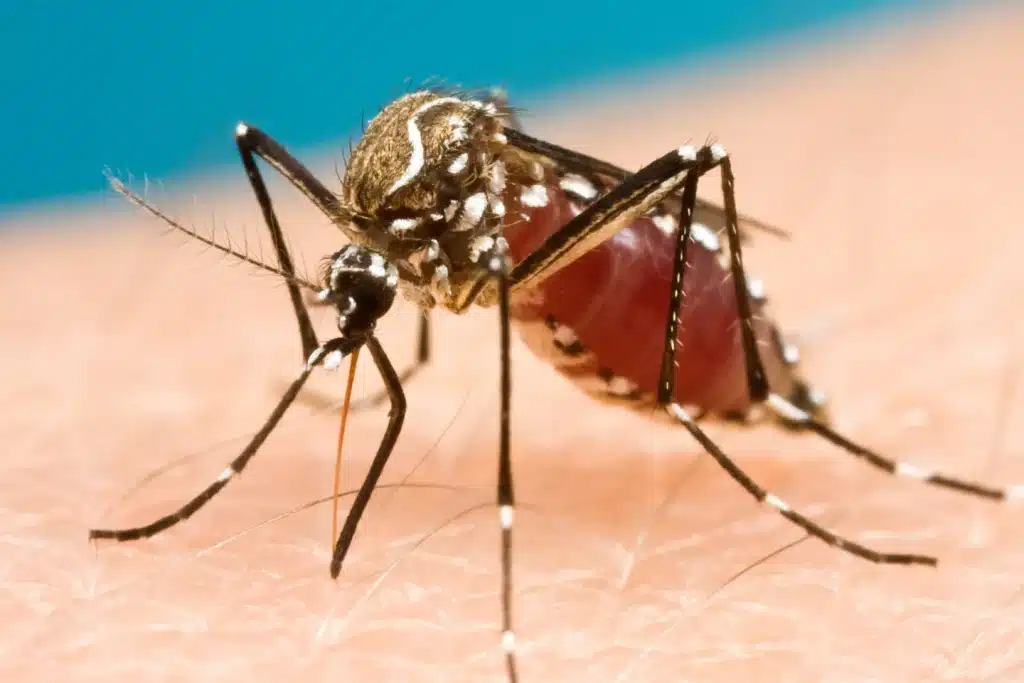
Dengue is a mosquito-borne viral disease caused by dengue virus that is most commonly transmitted to people by the mosquito Aedes aegypti.
Dengue virus is not endemic (i.e., does not occur naturally) in Australia, but it may be introduced to the country from travellers returning from Asia, the Pacific, and other endemic countries. Localised outbreaks in Far North Queensland, where Aedes aegypti occur, may begin when local mosquitoes bite the infected traveler(s).
Australia does not have widespread endemic dengue transmission because:
- The virus is introduced via infected travellers
- Transmission requires competent mosquito populations, mainly Aedes aegypti, which are limited to tropical/subtropical regions in north Queensland
- Strong surveillance and vector control programs reduce sustained spread
- The risk of outbreaks has been greatly reduced by the establishment of biological control programs in Far North Queensland. These programs have established populations of Aedes aegypti infected with Wolbachia bacteria, the presence of which greatly reduces the ability of Aedes aegypti mosquitoes to transmit dengue and other viruses
Outbreaks typically occur in warm, wet seasons, when mosquito populations increase.
Dengue symptoms generally appear Symptoms usually appear 3–14 days after infection and may include:
- High fever
- Severe headache (often behind the eyes)
- Muscle and joint pain (“breakbone fever”)
- Nausea or vomiting
- Skin rash
On rare occasions, when a patient has been infected previously with a different dengue serotype (there are 4 distinct serotypes in circulation) they may experience dengue haemorrhagic fever (DHF), characterised by internal bleeding and requiring urgent medical attention.
Historically, most locally acquired dengue cases have occurred in northern Queensland where Aedes aegypti is most common. In the Torres Strait islands, Aedes albopictus drive localised outbreaks in the absence of Aedes aegypti. Historic outbreaks of dengue in Queensland increased in frequency and intensity from the early 1990s to 2000s in parallel with increased international air travel and trade. In the early 2000s, outbreaks of dengue where common, with total cases totaling in the hundreds. In 2008 and 2009 over 900 cases were reported in north Queensland – the worst dengue outbreak in Queensland for 50 years. The deployment of the wMel strain of Wolbachia into local Aedes aegypti populations across many parts of north Queensland has resulted in a dramatic reduction of local dengue transmission since the first releases in 2011.
Because there is no widely available or effective vaccine against dengue virus, bite prevention is key.
Avoid mosquito bites
- Use repellent containing DEET, picaridin, or oil of lemon eucalyptus
- Wear long sleeves and long pants, especially dawn and dusk
- Reduce exposure indoors
- Use air conditioning or screened windows
- Sleep under mosquito nets if in exposed settings
- Use plug-in or coil repellents in high-risk areas
Remove breeding sites around homes
- Empty or cover containers holding water (buckets, pots, toys)
- Clean gutters and drains
- Ensure rainwater tanks are properly screened
Travel awareness
- If travelling to dengue-affected regions:
- Use repellent continuously (not just at night)
- Stay in screened or air-conditioned accommodation
Be especially careful during daytime (peak biting time for Aedes mosquitoes)