Skip to content
Member Login
Log Out
Join MARC
Access Portal
  • Home
  • What We Do
  • Mosquito-Borne Diseases
  • News
  • Membership
  • Contact
  • Home
  • What We Do
  • Mosquito-Borne Diseases
  • News
  • Membership
  • Contact
Member Login
Join MARC

Home / News / Native Vegetation Barriers Show Promise for Controlling Coastal Biting Midges

Native Vegetation Barriers Show Promise for Controlling Coastal Biting Midges

Share this article

Facebook
Twitter
LinkedIn

A new Australian study has demonstrated that purpose-grown vegetation barriers can substantially reduce nuisance biting midge populations in coastal residential communities, while also delivering important secondary benefits for mosquito control.

The MARC Scientist in collaboration with the City of Moreton Bay evaluated the effectiveness of a purpose-planted Lilly Pilly vegetation barrier in reducing the abundance of biting midge in residential backyards before and after treatment of the barrier with a long-lasting insecticide.

Published in the Journal of the American Mosquito Control Association, the research found that homes adjacent to the vegetation barrier experienced 71% fewer biting midges prior to insecticide treatment, demonstrating the barrier’s ability to disrupt midge movement from nearby tidal breeding habitats. Following residual insecticide application, biting midge populations declined by 86%, while mosquito numbers fell by 79% across the study area.

The project used automated smart trap technology to continuously monitor biting midge and mosquito activity, generating thousands of observations and allowing researchers to evaluate changes in pest abundance in near real time.

Researchers say the findings provide strong evidence that vegetation barriers can form an effective part of integrated pest management programs in coastal communities where conventional control options are limited by environmental regulations and challenging wetland habitats. The study also highlighted the potential for carefully designed green infrastructure to deliver dual benefits for nuisance reduction and urban landscape enhancement.

The authors note that future research will focus on optimising barrier design, evaluating impacts on non-target species, and investigating the use of mixed native vegetation systems that may further improve both ecological and pest management outcomes.
You may also like...

Loading...
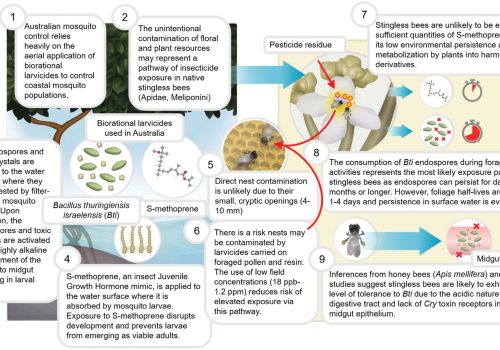
A summary of potential exposure pathways to mosquito control larvicides in coastal treatment sites.

Ensuring Mosquito Control Remains Safe for Australia’s Native Pollinators

A new review published in Environmental Entomology highlights the need for greater research into how mosquito control activities may affect…

  • May 2026
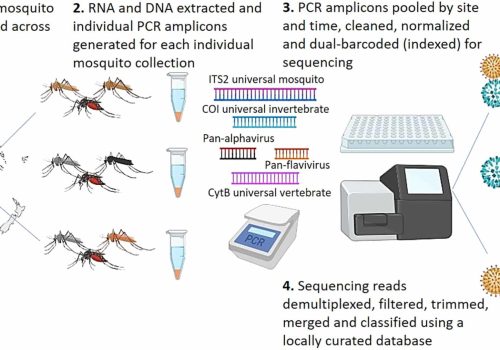
Workflow of the described all-in-one multi-loci metabarcoding approach to mosquito and arbovirus xenosurveillance.

MARC research delivers a new tool for improved mosquito and arbovirus surveillance

The MARC Scientist, members of QIMR Berghofer Mosquito Control Laboratory, and collaborating Australian health and vector surveillance agencies have developed…

  • January 2026
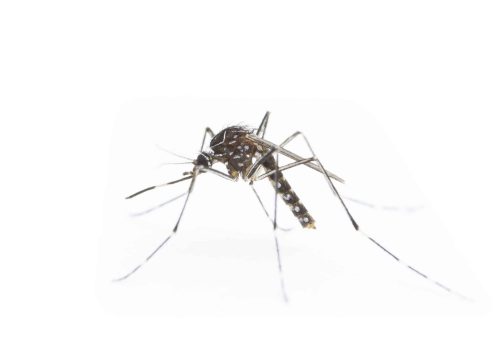
Australia's most common backyard mosquito and a frequent subject of MARC research.

The MARC celebrates more than 30 years of pioneering research

The year 2026 marks 34 years since the establishment in 1992 of the Local Authorities Research Committee (LARC) in South…

  • October 2025
Loading...
A summary of potential exposure pathways to mosquito control larvicides in coastal treatment sites.

Ensuring Mosquito Control Remains Safe for Australia’s Native Pollinators

A new review published in Environmental Entomology highlights the need for greater research into how mosquito control activities may affect…

  • May 2026
Workflow of the described all-in-one multi-loci metabarcoding approach to mosquito and arbovirus xenosurveillance.

MARC research delivers a new tool for improved mosquito and arbovirus surveillance

The MARC Scientist, members of QIMR Berghofer Mosquito Control Laboratory, and collaborating Australian health and vector surveillance agencies have developed…

  • January 2026
  • Home
  • About
  • Research
  • News
  • Join MARC
  • Log In
  • Privacy
  • ©2026 Mosquito and Arbovirus Research Committee (Inc.)

Contact Us

  • 07 3878 6152
  • info@marc.net.au
  • Website by iOnline
  • ©2026 Mosquito and Arbovirus Research Committee (Inc.)
  • Website by iOnline