Skip to content
Member Login
Log Out
Join MARC
Access Portal
  • Home
  • What We Do
  • Mosquito-Borne Diseases
  • News
  • Membership
  • Contact
  • Home
  • What We Do
  • Mosquito-Borne Diseases
  • News
  • Membership
  • Contact
Member Login
Join MARC

Home / News / The MARC celebrates more than 30 years of pioneering research

The MARC celebrates more than 30 years of pioneering research

Share this article

Facebook
Twitter
LinkedIn

The year 2026 marks 34 years since the establishment in 1992 of the Local Authorities Research Committee (LARC) in South East Queensland (SEQ), Australia’s first and, to this day, only mosquito control research committee. In 2000, the then members of LARC mutually agreed that management of the group’s substantial funds required a more formal structure, and they incorporated the LARC into the Mosquito and Arbovirus Research Committee Inc. (MARC), with legislated requirements for its financial management and auditing.

MARC members consist of local and state government agencies, academic institutions, and, on occasion, commercial partners. As of 2026, most of the original local government members of LARC remain as members of MARC, albeit with some local government amalgamations along the way. Queensland Health has been a member since 2005, supporting MARC activities through a series of service agreements.

Since its inception, MARC has supported employment of a number of full-time scientists, referred to as the MARC Scientist, at the Mosquito Control Laboratory at the Queensland Institute of Medical Research (QIMR), now called the QIMR Berghofer Medical Research Institute. The MARC Scientist works on projects decided and agreed upon by its membership. The MARC also supports collaborative projects with university researchers and has supported a number of PhD scholarships over the years.

Over its lifetime, MARC has supported and produced many Research Highlights.  These include:

  • Over 75 peer-reviewed scientific publications.
  • Led the development and refinement of critical Australian mosquito control practices and tools, including now-routine aerial larviciding using biorational insecticides.
  • Enabled the registration and use of Australia’s most commonly used mosquito larvicides, Bacillus thuringiensis israelensis (Bti) and S-methoprene, through rigorous scientific investigations. This included establishing their efficacy, longevity, environmental safety, particular to non-target aquatic organisms, and optimal application parameters.
  • Pioneering environmental management as an alternative to pesticide-based mosquito control.

To find out more of the wonderful and innovative history of the MARC, please see our article in Mosquito Bites magazine published by the Mosquito Control Association of Australia.
You may also like...

Loading...
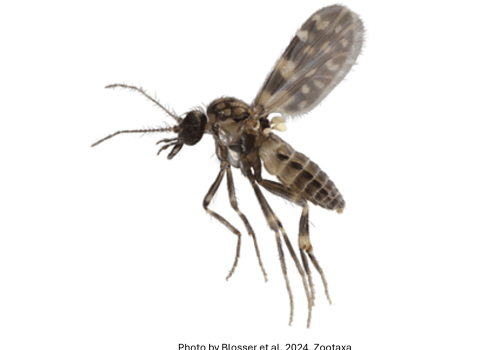
A female biting midge (Culicoides sp.)

Native Vegetation Barriers Show Promise for Controlling Coastal Biting Midges

A new Australian study has demonstrated that purpose-grown vegetation barriers can substantially reduce nuisance biting midge populations in coastal residential…

  • May 2026
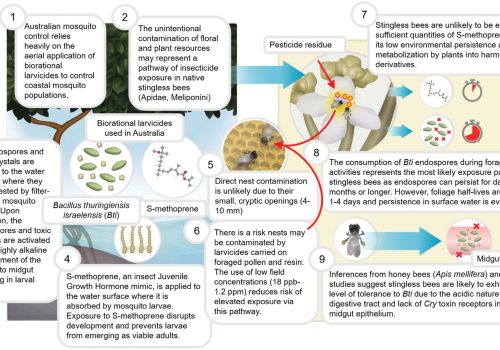
A summary of potential exposure pathways to mosquito control larvicides in coastal treatment sites.

Ensuring Mosquito Control Remains Safe for Australia’s Native Pollinators

A new review published in Environmental Entomology highlights the need for greater research into how mosquito control activities may affect…

  • May 2026
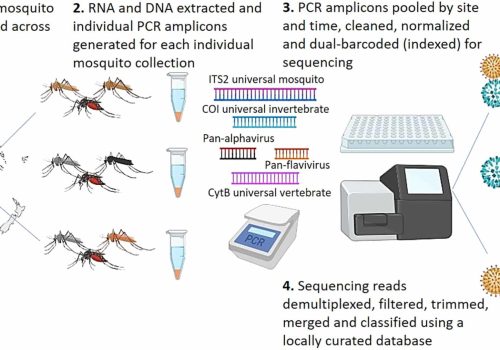
Workflow of the described all-in-one multi-loci metabarcoding approach to mosquito and arbovirus xenosurveillance.

MARC research delivers a new tool for improved mosquito and arbovirus surveillance

The MARC Scientist, members of QIMR Berghofer Mosquito Control Laboratory, and collaborating Australian health and vector surveillance agencies have developed…

  • January 2026
Loading...
A female biting midge (Culicoides sp.)

Native Vegetation Barriers Show Promise for Controlling Coastal Biting Midges

A new Australian study has demonstrated that purpose-grown vegetation barriers can substantially reduce nuisance biting midge populations in coastal residential…

  • May 2026
A summary of potential exposure pathways to mosquito control larvicides in coastal treatment sites.

Ensuring Mosquito Control Remains Safe for Australia’s Native Pollinators

A new review published in Environmental Entomology highlights the need for greater research into how mosquito control activities may affect…

  • May 2026
  • Home
  • About
  • Research
  • News
  • Join MARC
  • Log In
  • Privacy
  • ©2026 Mosquito and Arbovirus Research Committee (Inc.)

Contact Us

  • 07 3878 6152
  • info@marc.net.au
  • Website by iOnline
  • ©2026 Mosquito and Arbovirus Research Committee (Inc.)
  • Website by iOnline