Skip to content
Member Login
Log Out
Join MARC
Access Portal
  • Home
  • What We Do
  • Mosquito-Borne Diseases
  • News
  • Membership
  • Contact
  • Home
  • What We Do
  • Mosquito-Borne Diseases
  • News
  • Membership
  • Contact
Member Login
Join MARC

Home / Mosquito-Borne Diseases / Murray Valley Encephalitis Virus

Murray Valley Encephalitis Virus

Share this article

Facebook
Twitter
LinkedIn

Murray Valley encephalitis (MVEV) is the most serious of the endemic arboviruses in Australia with a 15-30% fatality rate. This is similar to the recently introduced Japanese encephalitis virus.

Large outbreaks of MVEV are uncommon (58 cases in 1974, 17 cases in 2011, 26 cases in 2023) but individual cases occur sporadically across high risk regions.

The transmission cycle is maintained via viraemic water birds and the freshwater mosquito Culex annulirostris. Culex annulirostris mosquitoes are found throughout Australia and are usually active from mid-spring to late autumn in south-eastern Australia and all year in northern parts of the country. Mosquito activity is more likely after heavy rainfall and flooding, or around wetlands.

People cannot transmit the virus to each other or to mosquitoes and those that have recovered from MVEV are not likely to get infected again.

The best protection against MVEV is to prevent mosquito bites as there is no vaccine against the virus. 

There is an increased risk of mosquito activity around:

  • floodwater
  • swamps
  • wetlands
  • other standing water

Protect yourself from mosquito bites by:

  • wearing long-sleeved, loose-fitting, light-coloured clothing and enclosed footwear. Mosquitoes can bite through tight clothing so it is best to avoid active wear when visiting areas with increased mosquito activity
  • using insect repellents that contain diethyltoluamide (DEET), picaridin or oil of lemon eucalyptus
  • use insect screens on windows and doors to prevent mosquitoes from entering the home
  • using mosquito coils and insecticide sprays whilst outdoors. Make sure to always follow the instructions on the product labels
  • avoiding areas of high mosquito activity, if you can

Although the mosquitoes associated with MVEV are more strongly associated with floodwater and wetland environments, you should take regular action to reduce the risk of mosquitoes breeding around your home. You can do this by:

  • removing standing water where mosquitoes may breed – like in plant pot basins or saucers, buckets, tyres, animal water bowls and kiddie pools
  • regularly cleaning out permanent water containers – such as ponds and pet water bowls
  • making sure water tank screens are in place and secure
  • keeping gutters clear and lawns mowed.
You may also like...

Loading...
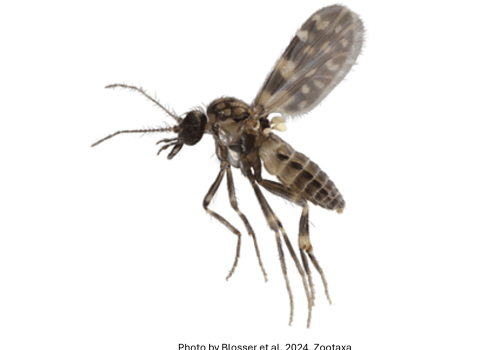
A female biting midge (Culicoides sp.)

Native Vegetation Barriers Show Promise for Controlling Coastal Biting Midges

A new Australian study has demonstrated that purpose-grown vegetation barriers can substantially reduce nuisance biting midge populations in coastal residential…

  • May 2026
A summary of potential exposure pathways to mosquito control larvicides in coastal treatment sites.

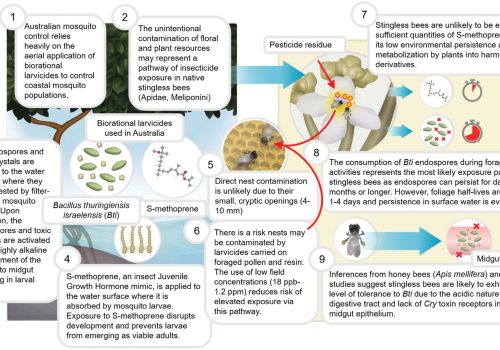
Ensuring Mosquito Control Remains Safe for Australia’s Native Pollinators

A new review published in Environmental Entomology highlights the need for greater research into how mosquito control activities may affect…

  • May 2026
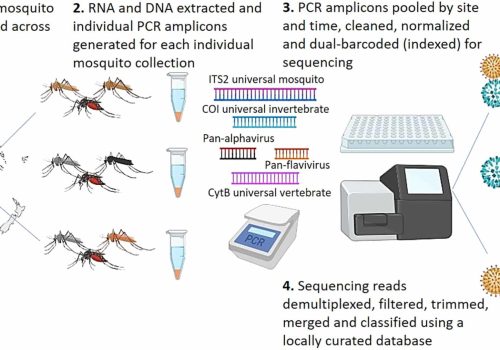
Workflow of the described all-in-one multi-loci metabarcoding approach to mosquito and arbovirus xenosurveillance.

MARC research delivers a new tool for improved mosquito and arbovirus surveillance

The MARC Scientist, members of QIMR Berghofer Mosquito Control Laboratory, and collaborating Australian health and vector surveillance agencies have developed…

  • January 2026
1 2 Next »
Loading...
A female biting midge (Culicoides sp.)

Native Vegetation Barriers Show Promise for Controlling Coastal Biting Midges

A new Australian study has demonstrated that purpose-grown vegetation barriers can substantially reduce nuisance biting midge populations in coastal residential…

  • May 2026
A summary of potential exposure pathways to mosquito control larvicides in coastal treatment sites.

Ensuring Mosquito Control Remains Safe for Australia’s Native Pollinators

A new review published in Environmental Entomology highlights the need for greater research into how mosquito control activities may affect…

  • May 2026
  • Home
  • About
  • Research
  • News
  • Join MARC
  • Log In
  • Privacy
  • ©2026 Mosquito and Arbovirus Research Committee (Inc.)

Contact Us

  • 07 3878 6152
  • info@marc.net.au
  • Website by iOnline
  • ©2026 Mosquito and Arbovirus Research Committee (Inc.)
  • Website by iOnline