Skip to content
Member Login
Log Out
Join MARC
Access Portal
  • Home
  • What We Do
  • Mosquito-Borne Diseases
  • News
  • Membership
  • Contact
  • Home
  • What We Do
  • Mosquito-Borne Diseases
  • News
  • Membership
  • Contact
Member Login
Join MARC

Home / Mosquito-Borne Diseases / Ross River Virus

Ross River Virus

Share this article

Facebook
Twitter
LinkedIn

Ross River virus (RRV) is an endemic, mosquito-borne pathogen that occurs all over Australia.

The virus was first isolated from Aedes vigilax mosquitoes collected on the banks of the Ross River in Townsville in 1959 but it was not associated with clinical symptoms until some years later.

Approximately 5,000 cases are notified every year with sporadic outbreaks also recorded in the Pacific Islands. The largest Australian epidemic (9,550 cases) occurred in 2015, with the majority of cases recorded in Queensland.

Acute symptoms usually develop within 7 to 9 days of contracting the virus and include fever, rash, joint and muscle pain, swollen lymph glands, sore throat and fatigue. Debilitating chronic joint pain may last for several month or even years.

The transmission of RRV is complex and multiple mosquito species may be responsible. Across Australia, more than 40 mosquito species have been associated with the virus in the field. These include the common pest species Culex annulirostris, Aedes vigilax, Aedes procax, and Aedes notoscriptus.

RRV infects mosquitoes when they bite viraemic vertebrates that include horses, kangaroos, possums, birds and other native wildlife. We have a poor understanding of the key virus reservoirs and transmission pathways in different habitats.

Those who are more likely to get RRV infection are:

  • people who live or work in warm, humid climates near bodies of water
  • people who have visited or live in or around wetlands or rivers, particularly during the summer months
  • people who work or do outside activities (for example, camping, fishing, hiking, gardening) in coastal and inland areas

There is currently no vaccine against RRV. The best way to avoid the virus is to not get bitten by mosquitoes. Protect yourself:

  • Use insect repellent. The best mosquito repellents are those the include either diethyltoluamide (DEET), picaridin, or oil of lemon eucalyptus
  • Wear long, loose fitting and light-coloured clothing and covered shoes when outside
  • Avoid spending lots of time outdoors at dawn and dusk when mosquitoes are most active
  • Cover windows, doors, and other entranced with insect screens
  • Remove any containers around your home that hold water where mosquitoes may breed
You may also like...

Loading...
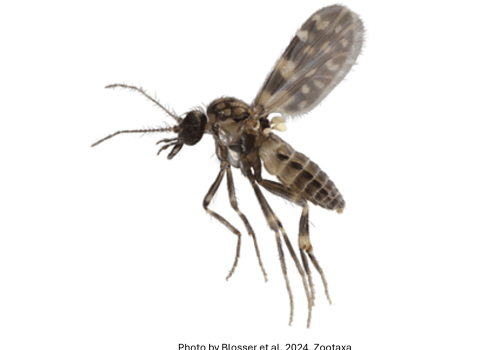
A female biting midge (Culicoides sp.)

Native Vegetation Barriers Show Promise for Controlling Coastal Biting Midges

A new Australian study has demonstrated that purpose-grown vegetation barriers can substantially reduce nuisance biting midge populations in coastal residential…

  • May 2026
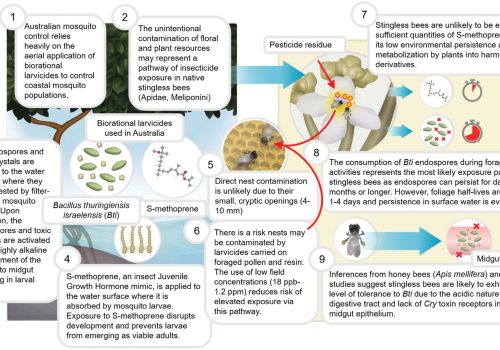
A summary of potential exposure pathways to mosquito control larvicides in coastal treatment sites.

Ensuring Mosquito Control Remains Safe for Australia’s Native Pollinators

A new review published in Environmental Entomology highlights the need for greater research into how mosquito control activities may affect…

  • May 2026
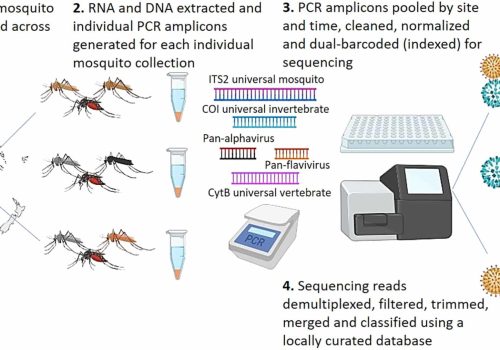
Workflow of the described all-in-one multi-loci metabarcoding approach to mosquito and arbovirus xenosurveillance.

MARC research delivers a new tool for improved mosquito and arbovirus surveillance

The MARC Scientist, members of QIMR Berghofer Mosquito Control Laboratory, and collaborating Australian health and vector surveillance agencies have developed…

  • January 2026
1 2 Next »
Loading...
A female biting midge (Culicoides sp.)

Native Vegetation Barriers Show Promise for Controlling Coastal Biting Midges

A new Australian study has demonstrated that purpose-grown vegetation barriers can substantially reduce nuisance biting midge populations in coastal residential…

  • May 2026
A summary of potential exposure pathways to mosquito control larvicides in coastal treatment sites.

Ensuring Mosquito Control Remains Safe for Australia’s Native Pollinators

A new review published in Environmental Entomology highlights the need for greater research into how mosquito control activities may affect…

  • May 2026
  • Home
  • About
  • Research
  • News
  • Join MARC
  • Log In
  • Privacy
  • ©2026 Mosquito and Arbovirus Research Committee (Inc.)

Contact Us

  • 07 3878 6152
  • info@marc.net.au
  • Website by iOnline
  • ©2026 Mosquito and Arbovirus Research Committee (Inc.)
  • Website by iOnline