Skip to content
Member Login
Log Out
Join MARC
Access Portal
  • Home
  • What We Do
  • Mosquito-Borne Diseases
  • News
  • Membership
  • Contact
  • Home
  • What We Do
  • Mosquito-Borne Diseases
  • News
  • Membership
  • Contact
Member Login
Join MARC

Home / Mosquito-Borne Diseases / Zika Virus

Zika Virus

Share this article

Facebook
Twitter
LinkedIn

Zika virus (ZIKV) infection during pregnancy can cause infants to be born with microcephaly and other congenital malformations.

Infection is also associated with other complications of pregnancy including preterm birth and miscarriage and an increased risk of neurologic complications including Guillain-Barré syndrome, neuropathy and myelitis.

Zika virus is primarily transmitted through the bite of Aedes aegypti mosquitoes but may also be transmitted sexually, from human to human. It may also be passed from mother to child during pregnancy. 

Imported cases are detected in Australia each year in travelers returning home from overseas, but there has not yet been any local transmission.

The vast majority of Zika cases in adults are asymptomatic but where infection is reported, its symptoms appear similar to mild dengue.

For more information, please visit here.
You may also like...

Loading...
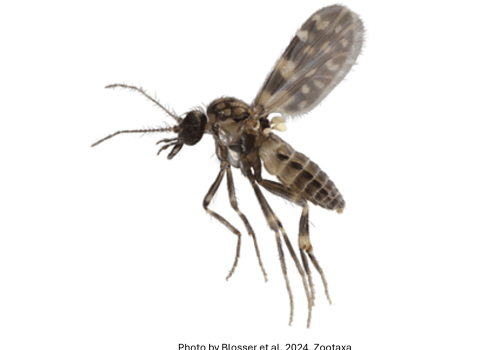
A female biting midge (Culicoides sp.)

Native Vegetation Barriers Show Promise for Controlling Coastal Biting Midges

A new Australian study has demonstrated that purpose-grown vegetation barriers can substantially reduce nuisance biting midge populations in coastal residential…

  • May 2026
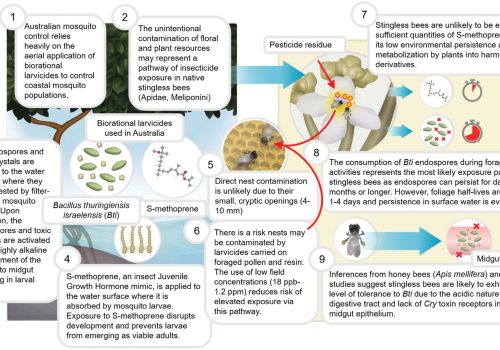
A summary of potential exposure pathways to mosquito control larvicides in coastal treatment sites.

Ensuring Mosquito Control Remains Safe for Australia’s Native Pollinators

A new review published in Environmental Entomology highlights the need for greater research into how mosquito control activities may affect…

  • May 2026
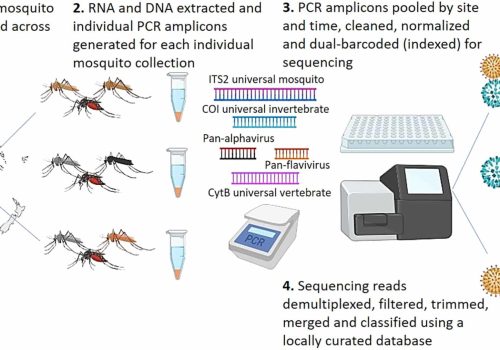
Workflow of the described all-in-one multi-loci metabarcoding approach to mosquito and arbovirus xenosurveillance.

MARC research delivers a new tool for improved mosquito and arbovirus surveillance

The MARC Scientist, members of QIMR Berghofer Mosquito Control Laboratory, and collaborating Australian health and vector surveillance agencies have developed…

  • January 2026
1 2 Next »
Loading...
A female biting midge (Culicoides sp.)

Native Vegetation Barriers Show Promise for Controlling Coastal Biting Midges

A new Australian study has demonstrated that purpose-grown vegetation barriers can substantially reduce nuisance biting midge populations in coastal residential…

  • May 2026
A summary of potential exposure pathways to mosquito control larvicides in coastal treatment sites.

Ensuring Mosquito Control Remains Safe for Australia’s Native Pollinators

A new review published in Environmental Entomology highlights the need for greater research into how mosquito control activities may affect…

  • May 2026
  • Home
  • About
  • Research
  • News
  • Join MARC
  • Log In
  • Privacy
  • ©2026 Mosquito and Arbovirus Research Committee (Inc.)

Contact Us

  • 07 3878 6152
  • info@marc.net.au
  • Website by iOnline
  • ©2026 Mosquito and Arbovirus Research Committee (Inc.)
  • Website by iOnline